
What is EHR integration architecture?
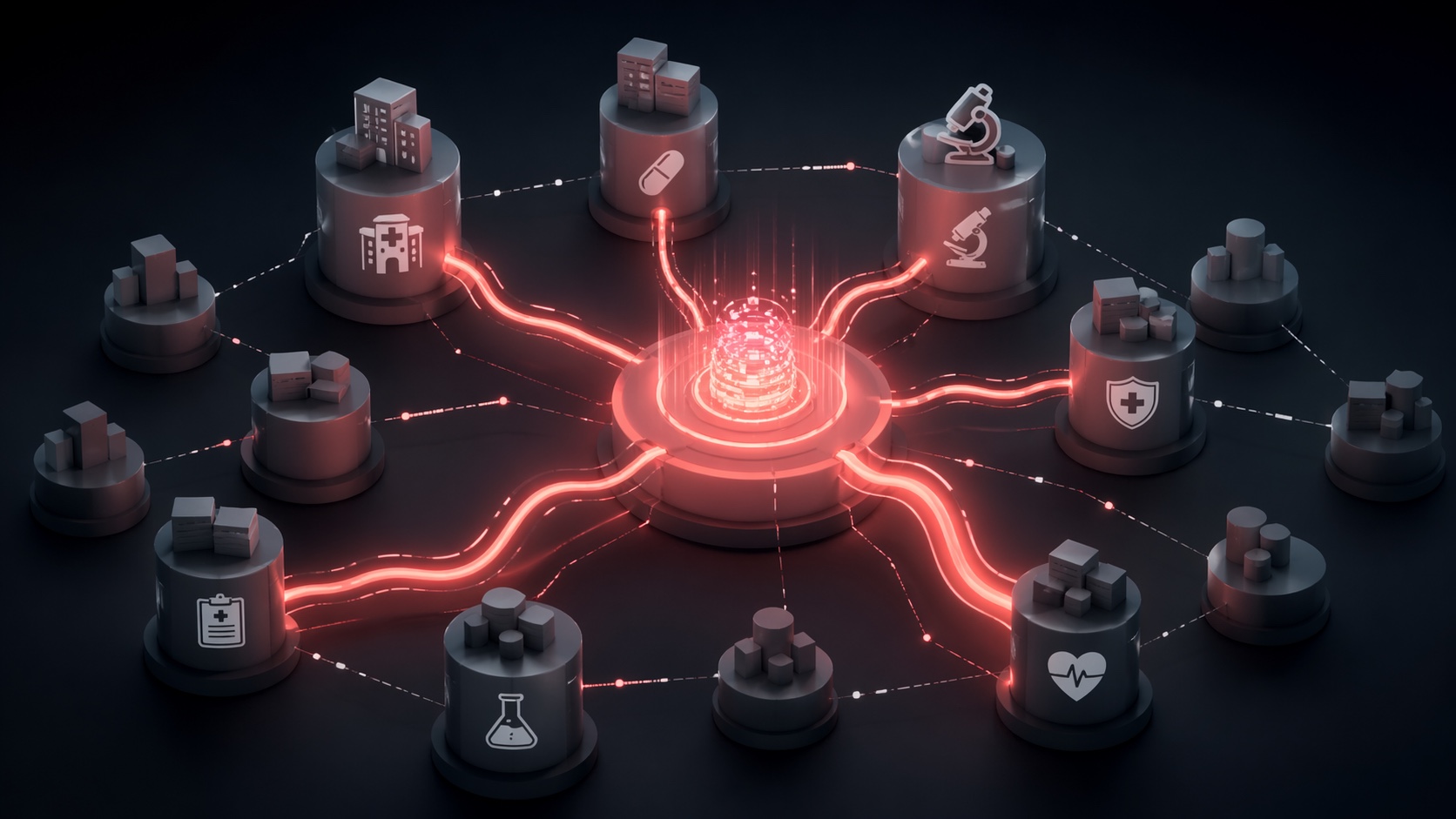
EHR integration architecture is the system design that enables healthcare platforms—EHR, lab, radiology, pharmacy, and billing systems—to exchange data in real time using standards like FHIR and event-driven infrastructure.
Why don’t healthcare systems communicate properly?
Most healthcare systems rely on outdated HL7 interfaces, batch processing, and siloed systems, which creates delays, inconsistent data, and limited interoperability.
What is the best way to integrate EHR systems?
The most effective approach is an event-driven architecture combined with FHIR APIs, enabling real-time data exchange and scalability.
What is the difference between HL7 and FHIR?
HL7 v2 is a legacy messaging standard with high variability, while FHIR is a modern API-based standard that enables consistent, real-time integration.
Your Hospital Runs 16 Software Systems. They Share Data Through Excel Exports and Prayer.
The average U.S. hospital operates 16 or more distinct software systems. EHR. Lab information system. Radiology (PACS/RIS). Pharmacy. Scheduling. Billing. Patient portal. Population health. Credentialing. Supply chain. And more.
In theory, these systems form an integrated technology ecosystem. In practice, they form a collection of data silos connected by nightly batch files, manual data entry, and the institutional knowledge of three IT staff members who know which HL7 interfaces break on weekends.
The result: a physician orders a lab test in the EHR, the order is transmitted to the lab system via an HL7 v2 interface that was built in 2011, the lab processes the test, results are posted back to the EHR 2-6 hours later (or the next morning if the batch job runs overnight), and if the ordering physician happens to be in the patient portal reviewing records, they will not see the result there because the portal pulls from a different data source on a different refresh cycle.
This is not interoperability. This is interoperability theater.
Why Healthcare Integration Is Uniquely Hard
Healthcare integration faces challenges that most industries do not:
Standards fragmentation. HL7 v2 (the dominant messaging standard) allows so much optionality that two “HL7-compliant” systems can send messages the other cannot parse. This is why many organizations are now moving toward healthcare software modernization initiatives to standardize their architecture.
Vendor resistance. EHR vendors historically treated interoperability as a competitive threat, not a feature. Opening data access means enabling competitors.
Clinical data complexity. Healthcare data is not structured neatly. A single patient encounter generates structured, semi-structured, and unstructured data.
Real-time clinical requirements. When a critical lab result posts, the ordering physician needs to know now — not when the nightly batch runs. This is where healthcare data pipeline architecture becomes essential for real-time data flow.
Three Integration Patterns (And When to Use Each)
Pattern 1: Point-to-Point (What You Have)
System A ←→ System B
System A ←→ System C
Every system connects directly to every other system it needs to communicate with.
Why it fails at scale:
16 systems = up to 120 connections.
Pattern 2: Integration Engine / ESB (What You Think You Need)
System A → Integration Engine → System B
A central integration engine acts as a message broker.
Strengths:
- Centralizes integration logic
- Supports message transformation
- Provides monitoring
Limitations:
- Becomes a bottleneck
- Single point of failure
- Still batch-oriented
Pattern 3: Event-Driven Architecture with FHIR (What You Actually Need)
System A → Event Bus → System B
An event-driven architecture where systems publish events and others subscribe in real time.
Strengths:
- Real-time by default
- Loose coupling
- Scalable
- Standardized
This is the foundation of modern AI-powered healthcare software in 2026, where systems must react instantly to data.
FHIR: The Integration Foundation
FHIR (Fast Healthcare Interoperability Resources) is the standard that makes modern healthcare integration possible:
- Resource-based data model
- RESTful APIs
- SMART on FHIR authorization
- Subscription-based real-time updates
FHIR removes the need for custom integrations and enables interoperability at scale, especially when combined with HIPAA-compliant AI deployment practices.
Real-Time Data Sync: The Missing Piece
The difference between batch integration and real-time integration is the difference between knowing something happened yesterday and knowing right now.
Real-time sync architecture:
- Events are published instantly
- Systems react immediately
- Data flows in milliseconds
This is what enables modern clinical decision-making.
Implementation Roadmap
Phase 1 (Months 1–3): Foundation
- Event bus infrastructure
- FHIR API gateway
- EHR adapter
Phase 2 (Months 3–6): Core Integrations
- Lab, pharmacy, radiology systems
- Real-time event flows
Phase 3 (Months 6–12): Full Coverage
- Remove legacy integrations
- Add advanced analytics
What HyperTrends Builds
HyperTrends designs and implements healthcare integration architectures — from FHIR API gateways to event-driven data platforms to real-time clinical data synchronization.
These systems are built as part of broader healthcare software modernization strategies, powered by healthcare data pipeline architecture, and aligned with HIPAA-compliant AI deployment standards.
The Bottom Line
Healthcare systems fail not because of lack of technology — but because their systems don’t communicate.
Modern EHR integration architecture solves this through real-time, scalable, and standardized design.
👉 Ready to make your systems actually talk to each other? Schedule a consultation

